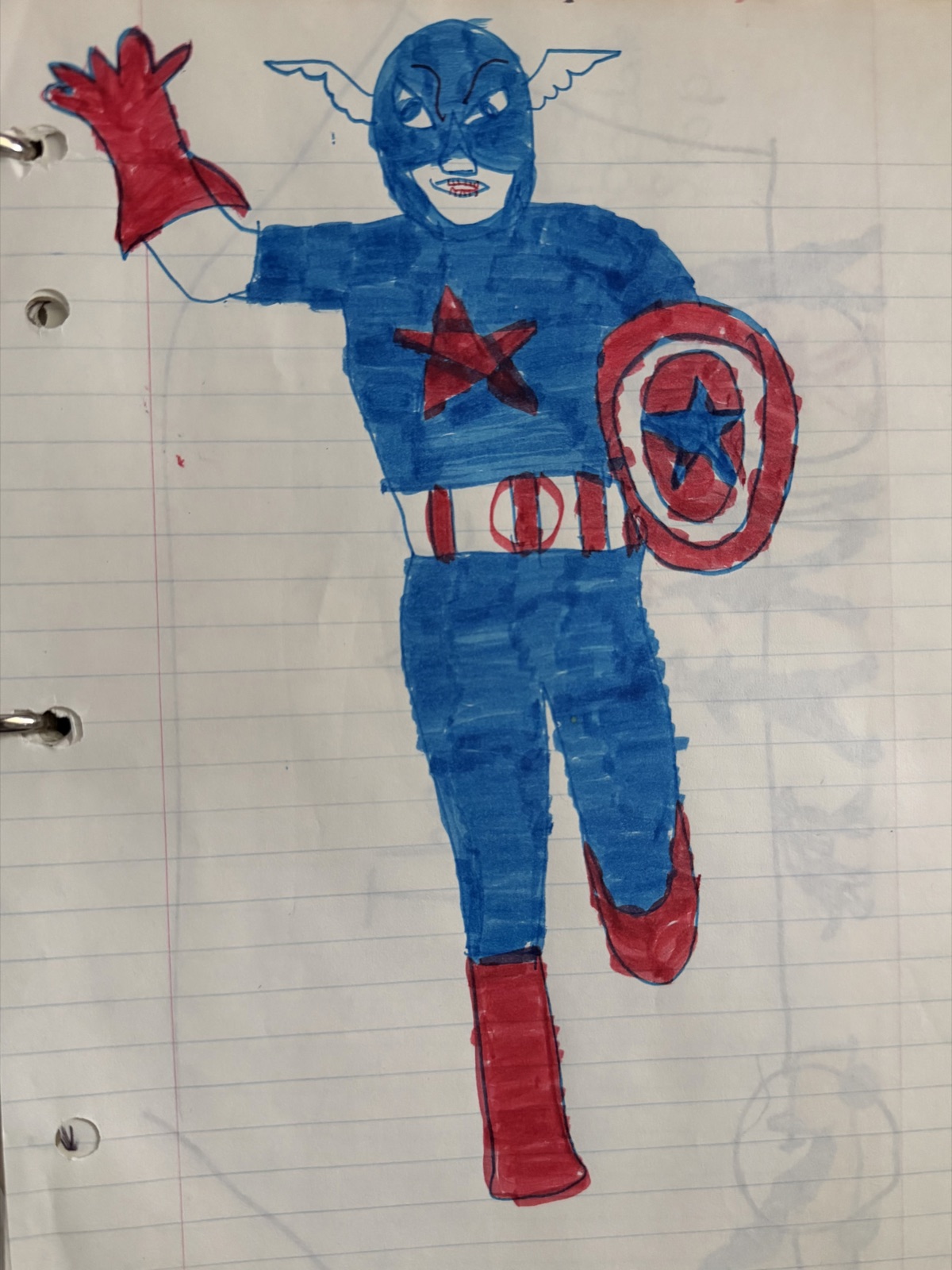
The oldest drawing of mine I can put my hands on is a Captain America in blue and red marker on lined notebook paper. I made it in 1976. I was four.
The second is a dinosaur from 1977, in crayon: a brown dinosaur standing in blue water in front of a volcano.
I started drawing at four or five, copying superheroes out of comic books and filling pages with dinosaurs. My mom kept them in a binder. These two came out of it.
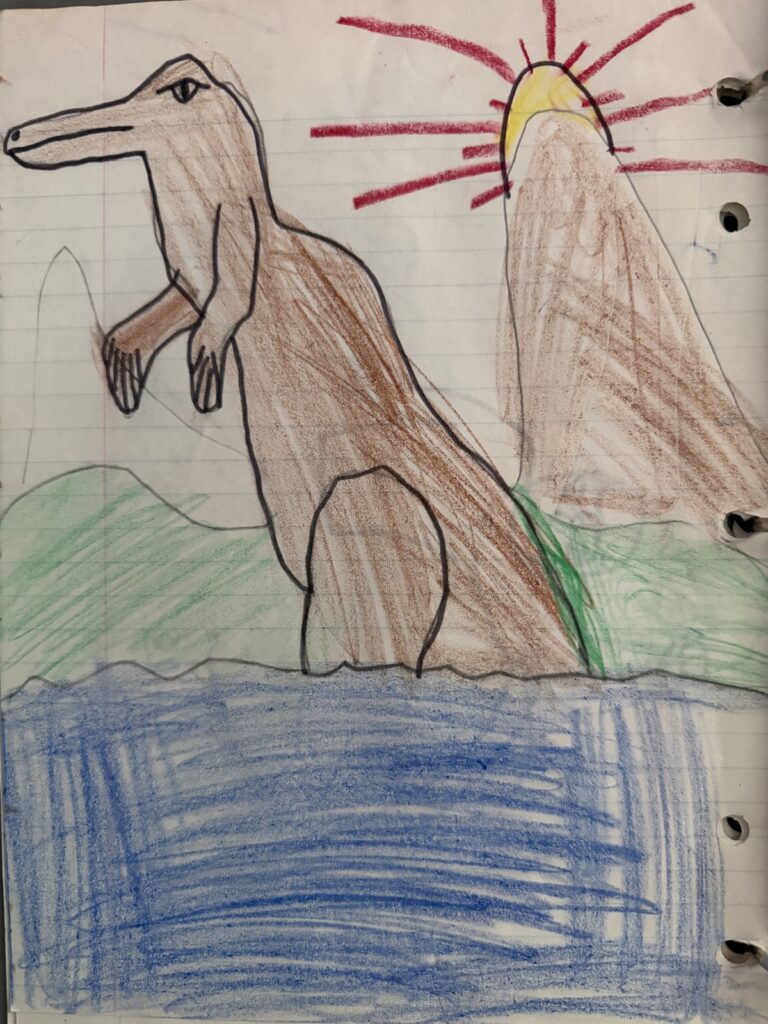
Look at the Captain America and you can see the habit that never left. There was a picture in front of me, and I was trying to get what I saw onto the paper. Every piece I make today starts the same way, with a reference photo, and ends when I stop finding things to fix. The tools changed. The method is the one a four-year-old worked out with a comic book and a marker.
I grew up in Miami, studied business at the University of Alabama, and built a career in technology. For most of those years drawing was a hobby. I kept the work to myself, partly because I was afraid that making it more than a hobby would make me enjoy it less.
COVID changed that. Home in 2020, I picked the pencil back up and never put it down.
Believe it or not, one of the first things I drew during lockdown was a dinosaur. Five-year-old me would’ve been so proud.
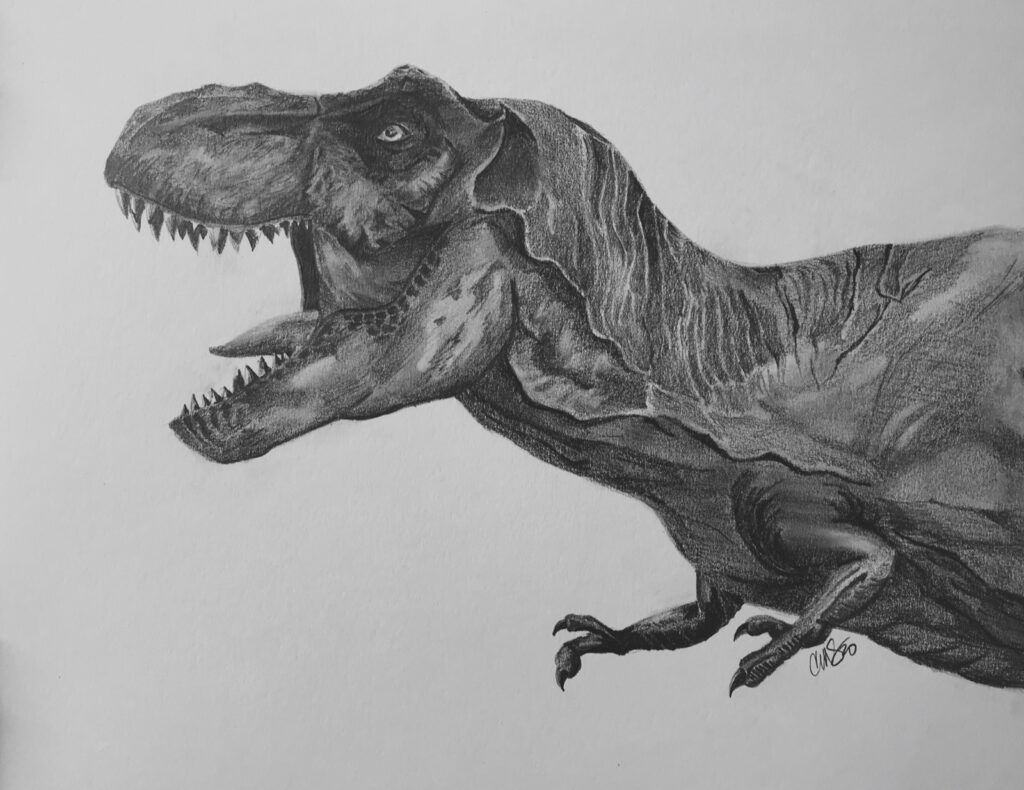
What I feared turned out to be backwards. The more I draw, the more I love it, and the more certain I am that this is what God put me on this earth to do.
The comic books never fully left either. The illustrators I still study are J.C. Leyendecker, Drew Struzan and Alex Ross. Leyendecker painted the covers of a different century, Struzan painted the movie posters I grew up with, and Ross paints the same comic book heroes I copied at four, with a realism that holds up next to a photograph.
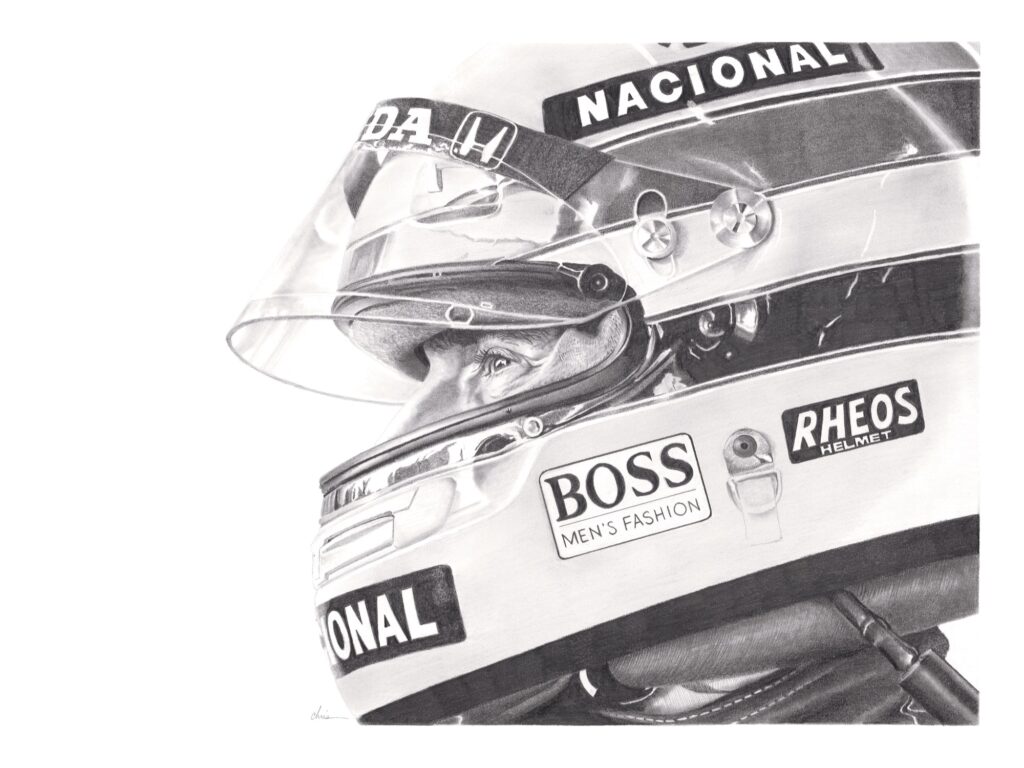
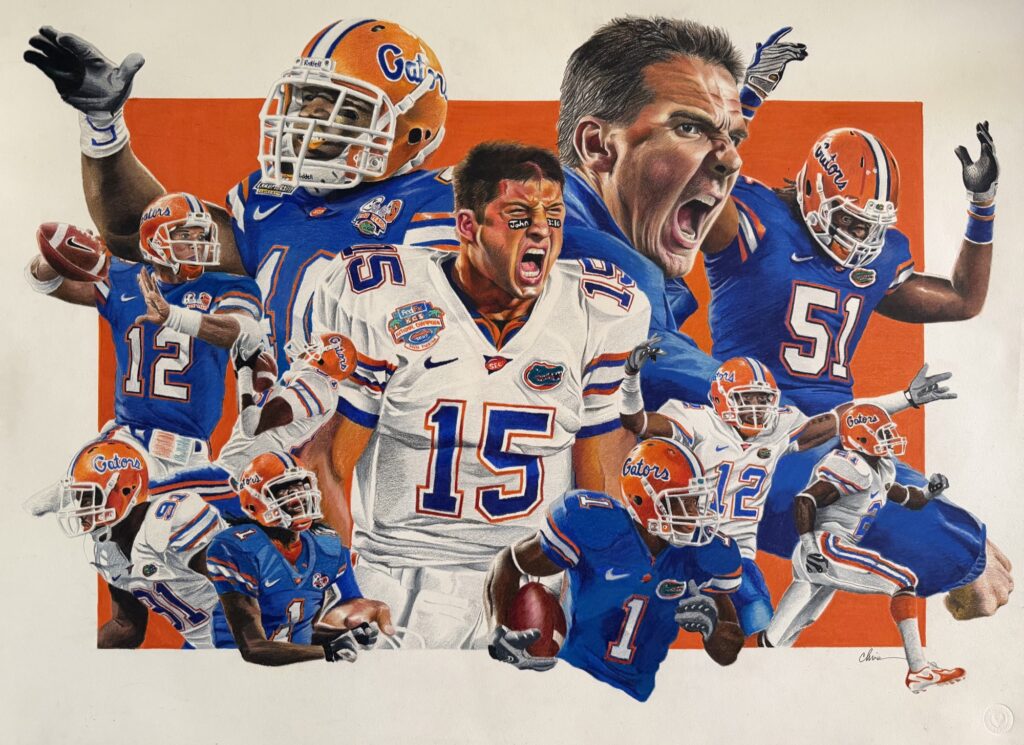
Today the work looks different from that binder. I draw in graphite, colored pencil, pastel pencil and watercolor, on Legion Stonehenge, a heavy, soft paper that takes a hundred layers. An 18 by 24 inch drawing takes forty to sixty hours.
I draw at the kitchen island, or at the drawing board in my home office, wherever there’s room to set up a board.
And I draw the people, places and moments people hold onto: a team’s greatest season, a driver’s best day, a campus gate someone walked through every morning for four years.
No filters, no AI, no digital shortcuts. Pencil, paper and time, the same three things I had in 1976.